
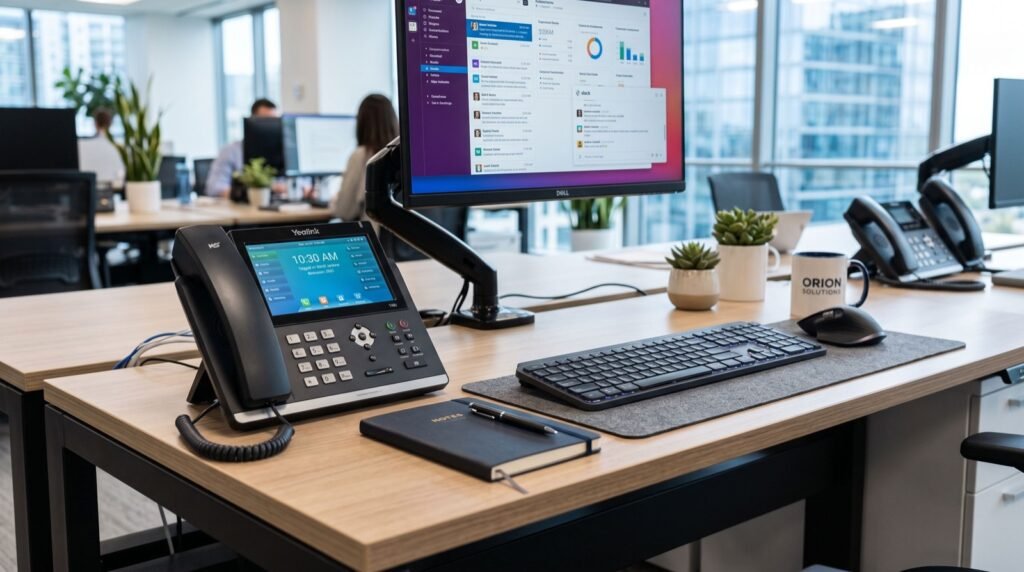
Small and medium businesses often assume enterprise-grade telephony is out of reach. In 2026, that assumption is outdated. An affordable SIP desk phone paired with a cloud PBX now gives a five-person shop the same call handling a large office enjoys. If you want a proven, budget-friendly starting point, the Fanvil V50P Basic Level IP Phone is built exactly for this kind of lean, reliable deployment.
This article is written for owners and office managers, not network engineers. It explains, in plain terms, how to plan an IP phone rollout that fits a modest budget while still delivering HD voice, professional call features, and room to grow.
Why VoIP Makes Sense for Smaller Teams
For a small business, every rupee of overhead counts. Traditional phone lines charge per line and lock you into a carrier’s rigid plans. VoIP phones flip that model. You pay for internet you already have and add extensions in software as you hire.
The practical wins for a lean operation include:
- No per-line rental to a phone company, just your existing broadband.
- Professional features like auto-attendant, voicemail-to-email, and call queues.
- Remote and home-based staff sharing the same business number.
- Easy growth, since new extensions are a configuration change, not a construction job.
Getting the Foundation Right
A successful small-business phone system rests on three simple pillars: the right phones, a dependable PBX, and a network that treats voice with priority.
Pick Phones by Role, Not Price Alone
Buying the cheapest phone for every desk is a false economy, but so is over-spending on features nobody uses. A basic HD handset suits a reception or workshop desk perfectly, while a color business model fits a sales rep who lives on the phone.
Choose Cloud or On-Premise PBX
Cloud PBX removes the need to run and maintain a server, which most small businesses prefer. On-premise makes sense only if you have specific control or compliance needs and the staff to manage it.
Prepare the Network
Voice hates congestion. A modest router with QoS, a PoE switch, and a separate VLAN for phones will outperform expensive hardware on a flat, unmanaged network every time.
Cost Versus Value at a Glance
The table below shows where money is well spent and where you can economise without regret.
| Component | Economise? | Reasoning |
|---|---|---|
| Reception phone | Yes | Basic HD handset is plenty |
| Sales desk phone | Partly | Color display and line keys help |
| PoE switch | No | Powers phones cleanly, avoids adapters |
| Internet uplink | No | Call quality depends on stable bandwidth |
Many teams looking for fanvil ip phones in Lahore begin with a handful of basic handsets, prove the value on real calls, then expand to color and video models as the business scales.
A Step-by-Step Rollout for Small Offices
Keep the plan simple and you will be live within days, not weeks.
- List your extensions and decide who needs advanced features.
- Select a cloud PBX plan sized to your headcount.
- Order SIP-compatible phones matched to each role.
- Set up a PoE switch and a dedicated voice VLAN.
- Auto-provision the phones, test every extension, then train staff.
Avoiding Common Small-Business Mistakes
The biggest pitfall is skipping network preparation. Plugging phones into the same congested switch as heavy file transfers guarantees choppy calls. The second pitfall is buying from a source with no local support. When something needs adjusting, working with dependable specialists saves you days of trial and error.
A field tip worth remembering: label every network cable and phone during install. When you add or move a desk later, that five minutes of labeling pays for itself many times over.
Scaling From Five Desks to Fifty
The beauty of a VoIP foundation is that the day-one setup rarely needs to be torn out as you grow. A small business that starts with five basic handsets simply adds extensions in the PBX and plugs new phones into spare PoE ports. There is no waiting for a carrier to run new copper or approve additional lines.
Plan for this growth from the start. Buy a PoE switch with a few extra ports, choose a cloud PBX plan that lets you add seats month to month, and keep your provisioning template documented. When a Lahore business doubles its headcount, the phone system should feel like a minor configuration change, not a fresh project.
Training Staff Without the Headache
Even the best phones fail if staff find them confusing. Keep onboarding light: a one-page cheat sheet covering transfer, hold, conference, and voicemail handles ninety percent of daily use. Record a short video walkthrough for new hires so training does not depend on one person’s availability. Because modern IP phones share a consistent interface across a brand family, staff who learn one handset can use the others with almost no relearning, which keeps productivity high as the team expands.
Reliability and Security Basics
VoIP runs on the same open standards that power global telephony, chiefly the Session Initiation Protocol defined in RFC 3261. To keep a small system safe, change default admin passwords, restrict external SIP access, and enable encryption where your PBX supports it. Simple habits prevent the toll-fraud surprises that catch unprepared businesses.
Frequently Asked Questions
Are IP phones worth it for a small business?
Yes. VoIP phones remove per-line rental, add professional call features, and scale as you hire. Even a small team gets auto-attendant, voicemail-to-email, and remote extensions that were once enterprise-only.
How much internet speed do IP phones need?
Roughly 100 kbps of upload per simultaneous call. Most business broadband handles several calls easily, especially when QoS prioritises voice traffic over downloads and backups.
Can I keep my current phone number with VoIP?
In most cases yes, through number porting handled by your VoIP provider. Confirm availability for your specific number before you switch so there is no gap in service.
Do I need an IT team to run VoIP phones?
No. A cloud PBX with auto-provisioning and a supplier that offers setup support means a small business can run a professional phone system without in-house engineers.
Budgeting the First Purchase
A first-time buyer often worries about upfront cost, but the numbers usually surprise them in a good way. For a small team, the main outlays are the handsets, a single PoE switch, and a modest monthly cloud PBX subscription. There is no expensive proprietary server to buy and no long carrier contract to sign. Spread across the productivity gains and the savings on line rental, most small businesses recover the setup cost within the first year, which makes the decision easier to justify to any owner watching the budget closely.
Conclusion
Enterprise-quality communication is now firmly within reach for small teams, and affordable fanvil ip phones make the entry point easy. Match phones to roles, choose a cloud PBX, prepare the network properly, and lean on local support. Follow that path and your VoIP phones will deliver clear, cost-effective calls that scale with your business.